




Build a Budget
Determine exactly where you stand financially
Know where you are before deciding where you'd like to go
A budget is the first tool you’ll need to build your financial future. This guide will walk you through the process, one step at a time.
-

Gather
Pencil, eraser, caffeine of choice and recent account statements.
-

Download
Download and print our 2-page budget template.
-

Put it on paper
Follow the guidelines below.
- At the top of Page, calculate your income.
- Gross Income = earnings before income tax and withholdings are deducted.
- Net Income = earnings after income tax and withholdings are deducted.
- Add additional income sources such as child support or rental income.
- Total as needed.
- The rest of Page 1 is a list of basic monthly expenses. Enter your family’s estimated current spending in the blue column. Use a extra page of lined paper if you need to add other essential expenses.
- Total the expenses in the blue column and enter that figure into the space labeled Total Essential Expenses.
- Page 2 is a list of less crucial expenses. Again, enter your family’s estimated amounts in the blue column and use an extra page to add other discretionary expenses.
- Total the expenses shown on page 2 and enter that figure into the space labeled Total Other Expenses.
- Transfer the Total Essential Expenses figure from page 1 to the space labeled Total Essential Expenses on page 2.
- Add Total Other Expenses and Total Essential Expenses. Enter the total in the space labeled Total Living Expenses.
- Subtract Total Living Expenses from Total Net Income.
- If the amount is positive, you are living within your means and should consider paying down debt or investing the ‘excess’ money in a savings vehicle such as a traditional savings account, a money market savings account or a savings certificate (CD).
- If the amount is negative, you are spending more than your income.
- Next steps if your income doesn’t cover expenses:
- Review each expense item on Pages 1 and 2 and determine which ones might be reduced.
- Write the reductions in the peach column labeled Changes Needed.
- Subtract the figure in the peach column from the figure in the blue column and enter the result in the purple Planned Budget column.
Congratulations!
You’ve taken the first step towards better money management. Reward yourself with chocolate.
What’s next?
Now that you’ve built your budget, monitor your expenses for the next month. Make modifications as necessary.
Continue this process each month to remain aware of spending habits.

Take a Look at these Budgeting Blog Posts
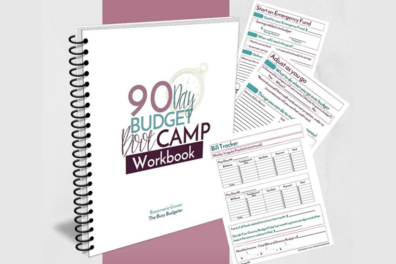
Budget Bootcamp
Getting your budget under control actually starts with organizing your home. Discover the story behind The Busy Budgeter, why messy kitchen routines drive up expensive dining-out habits, and how to use our digital banking tools to stop hidden cash leaks for good. Continue reading

Spending Less on Your Next Wardrobe Refresh
Need a wardrobe refresh but tired of retail sticker shock? Whether the kids are outgrowing their clothes overnight or you're just looking for a seasonal update, you don't have to pay full price. Discover four smart, digital-first strategies to automate your discounts, flip your old clothes for extra cash, and shop the smart way without breaking your budget. Continue reading

The World of Marriage, Kids and Money
Rushing into a major mortgage can easily transform the American Dream into a financial nightmare. Discover the inspiring real-world story of financial influencer Andy Hill, learn how his family eliminated over $48,000 of debt in a single year, and explore how to deploy those exact wealth-building strategies for your own household. Continue reading
Contact us
Visit a branch
Find the closest location
Learn online
Personal Finance
Call or Text
(325) 677-2274 – call or text
(800) 677-6770 – calls only